
Dog memorial garden ideas that survive the winter
A garden memorial has one advantage over everything else: it is somewhere you already go. You do not have to take it out of a drawer. The catch is that it is outside, in weather, for years — and most garden memorials people buy in the first month are cracked, sun-bleached or swallowed by a shrub by the second.
This is about making one that is still there in five years.
Start with the spot, not the object
Before choosing anything, find where the dog actually went. The sunny patch by the back door. The spot under the window where they waited. The corner they dug up every summer. A memorial in that place is somewhere you pass; a memorial in a tidy corner you never visit is a chore.
Two practical checks on any spot:
- Water. Does it pool after rain? Anything sitting in wet soil rots, heaves in frost, and grows algae within a season.
- Growth. What is within a metre? A shrub that is small now will swallow a marker in three years. That is not always bad — some people want it hidden — but decide on purpose.
Five things people actually do
1. A stone marker. The most literal option and the one that needs the least maintenance. What matters is the base: a stone bedded straight onto soil will tilt within two winters as the ground moves. Set it on a compacted gravel or sand base and it stays level. Anything with a painted or printed surface will fade outdoors; anything carved or cast into the material will not.
2. A plant instead of a marker. Cheaper, and it grows. Choose a perennial that suits your climate rather than something that looks good in a nursery in June — a shrub that is hardy in your zone will come back every year, and a tender one becomes a dead twig you have to look at. If you want something that flowers on the anniversary, check the bloom time before you buy, not after.
3. A bench. Underrated. It gives you a reason to sit somewhere for ten minutes, which is more useful than an object you look at and walk past. Wood needs oiling once a year; metal does not.
4. Ashes in the soil. People do this, and it is worth knowing two things. Cremated remains are alkaline and salty — a large quantity in one spot can burn roots, so it is usually mixed into a wide area or dug in under a shrub rather than poured into a planting hole. And if you might move house, think about whether you want the ashes to stay with the garden.
5. Nothing at all. Sitting in the spot is a legitimate memorial and costs nothing. Plenty of people find that an object makes the absence more formal than they want.
What survives a winter
The things that fail are predictable:
- Terracotta and thin ceramic. Water gets in, freezes, expands, splits. Every year.
- Anything painted. One summer of UV and the lettering is a ghost.
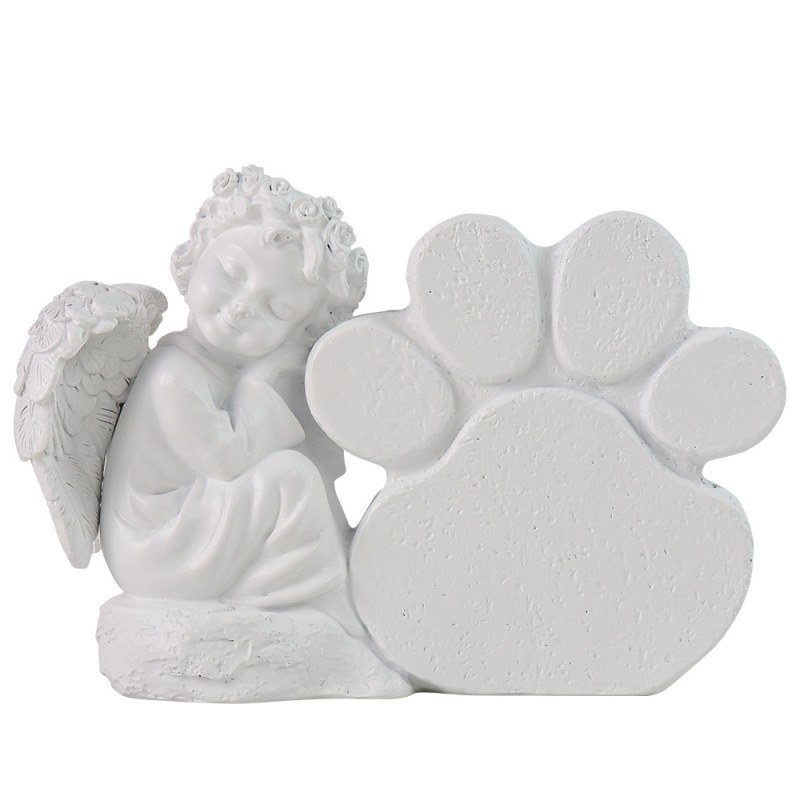
- Resin cast outdoors. Yellows and goes brittle in frost.
- Untreated wood in contact with soil. Rots from the bottom up, invisibly, until it tilts.
What lasts: dense stone, cast metal, and anything that was designed for outside rather than adapted to it. If a product page does not say it is for outdoor use, assume it is not.
If you rent, or have no garden
You still have options that are not a compromise:
- A pot. A large container with a hardy shrub gives you a memorial you can take with you when you move. This is the best answer for renters by a wide margin.
- A balcony corner. Same principle, smaller.
- Somewhere that is not yours. A favourite walk, a bench in a park, a beach. Nothing to maintain, and nobody can ask you to move it.
One thing to decide early
Do you want to be able to take it with you? A stone set into the ground is a decision for the house, not for you. A pot, a bench, or a piece kept indoors is a decision you can carry. Neither is wrong — but it is much easier to decide now than in the week you are moving out.